What to Bring to Cayo Icacos
No toilets, no shade, no water, no vendors, no bins, no lifeguard. The packing list that follows from that, plus the sargassum forecast to check.
Everything on this page follows from one sentence, published by Puerto Rico’s own tourism board:
No bathrooms, no shops, no restaurants, no shelters. Visitors must bring all supplies needed for the day and carry out all trash.
That is not a warning dressed up for effect. It is the operating condition, and the packing list is just it restated.
What the island does not have
No toilets. None, anywhere, ever. Two things soften it: the dock at Las Croabas has toilets and showers, so use them before you board, and some catamarans carry a restroom aboard — which is a legitimate reason to pay catamaran money rather than taxi money.
No shade on the beach. The island’s interior is scrub you hike through on the optional 45-minute walk, not canopy you can sit under. An umbrella is equipment, not comfort. One water-taxi operator includes one per group; another rents them for about $30.
No fresh water. Bring more than you think, for a five-hour day in Caribbean sun with no shade.
No vendors, no restaurants, no bar. Nothing is for sale on the island.
No bins. You carry out everything you carry in, including other people’s litter if you are so inclined.
No lifeguard. Swim with someone, and know that if something goes wrong there is no help on shore — only whoever is on the beach and a boat that may be an hour from returning.
The list
This list is for the water taxi, where you supply the day. If you are taking a catamaran instead, leave the two headline items at home: five of the six Icacos catamarans ban coolers and three ban umbrellas, and one of them bans outside food and drink outright. Those boats feed you precisely because you cannot bring your own.
Non-negotiable
- Water, more than you planned
- An umbrella or pop-up shade
- Reef-safe sunscreen — see the note below on why
- A bag for your rubbish
- Cash, if you are paying a captain on the day
Strongly advised
- Food, in a cooler; ice is usually not included even on the packages
- Water shoes — there is reef and there is fire coral
- A dry bag for a phone on a small open boat
- A hat and a rash vest, since shade is not an option
Worth knowing
- Beach chairs are usually not included, even on the paid packages, and rent for around $17
- Snorkel gear rents for about $25 if your boat does not include it
- Glass is prohibited on some boats, and coolers are refused on at least one catamaran
Sunscreen: use the good stuff, but not because of the law
You will read that reef-safe sunscreen is required by law in Puerto Rico. We went looking for the statute and could not find one. Bills have been filed since 2019 — oxybenzone and octinoxate, with modest fines attached — and we located no enacted law.
Hawaii, Key West and the US Virgin Islands do have bans, which is almost certainly where the claim comes from.
So the honest version: there is no fine, and you should still use it. Cayo Icacos was one of the sites measured in a peer-reviewed assessment of elkhorn coral across the La Cordillera reserve before and after Hurricane María. Across the fifteen sites studied, mean coral cover fell from 14.2% to 9.3%. We are not attaching that figure to Icacos specifically, because the per-site numbers were not something we could verify — only that Icacos was one of the places measured. The reef is damaged either way.
Sargassum: check the forecast, not the month
Sargassum is the one thing that can genuinely spoil the water, and Icacos sits on the wrong coast for it.
The season runs roughly May to August, with the wider Caribbean peak drifting into September. Puerto Rico’s east and northeast coasts are the exposed side — Fajardo and Luquillo are named among the most affected, while the west coast beaches stay comparatively clear. For scale, 2025 saw a record Atlantic bloom.
Icacos is not separately monitored, so a month-rule is the wrong instrument. CARICOOS publishes a seven-day sargassum inundation forecast for Puerto Rico and the Virgin Islands — that is the thing to check a few days out, and most guides do not mention it exists.
The other hazards, proportionally
Fire coral is reported as abundant on the reef, and jellyfish are described as common in the snorkelling areas — both from a single weak source, so treat them as likely rather than certain, and wear something on your feet.
On safety more broadly: we looked for documented incidents at Icacos and found no drowning and no water-taxi casualty. The one Coast Guard rescue we could place at Icacos involved an overturned personal watercraft in September 2025 — a jet ski, not a taxi. A separate fatality was off a different Fajardo beach.
We would rather report that absence plainly than imply the place is dangerous. The real risk here is not the boat; it is an unguarded beach with no shade, no water and nobody to help.
When the water is calmest
The trade-off is genuine and most pages pick one side of it.
December to April is driest and sunniest — the tourism board’s answer, and right for weather. But the northeast trade winds that make the crossing choppy are strongest in winter, so the driest months are the roughest at sea. Late spring and summer are calmer on the water and hotter, wetter, and inside the sargassum window.
February and March are the sweet spot on paper: tail of the trade-wind season, driest months of the year, before sargassum. And whatever month you choose, morning departures are calmer than afternoon ones.
Worst single month: September. Hurricane peak, warmest water, still within sargassum reach.
If you would rather not assemble the day yourself, the beach-day package arrives with the umbrella, the cooler and the snorkel gear already in the boat — three of the things the island cannot sell you. Lunch is still on you.
Can you camp?
No, and there is no permit to apply for.
That second half is the useful bit. Puerto Rico’s natural-resources department publishes a list of its camping areas — the state forests, a reservoir, and the Isla de Mona reserve, which has a real permit process. La Cordillera is not on that list at all. So this is not a case of needing paperwork you could obtain; overnight stays simply are not provided for.
Facilities, rules and hazards here come from Puerto Rico’s tourism board, the natural-resources department’s published plan, operator pages and peer-reviewed reef assessments, checked September 2026. Where a claim rested on one weak source we have said so.
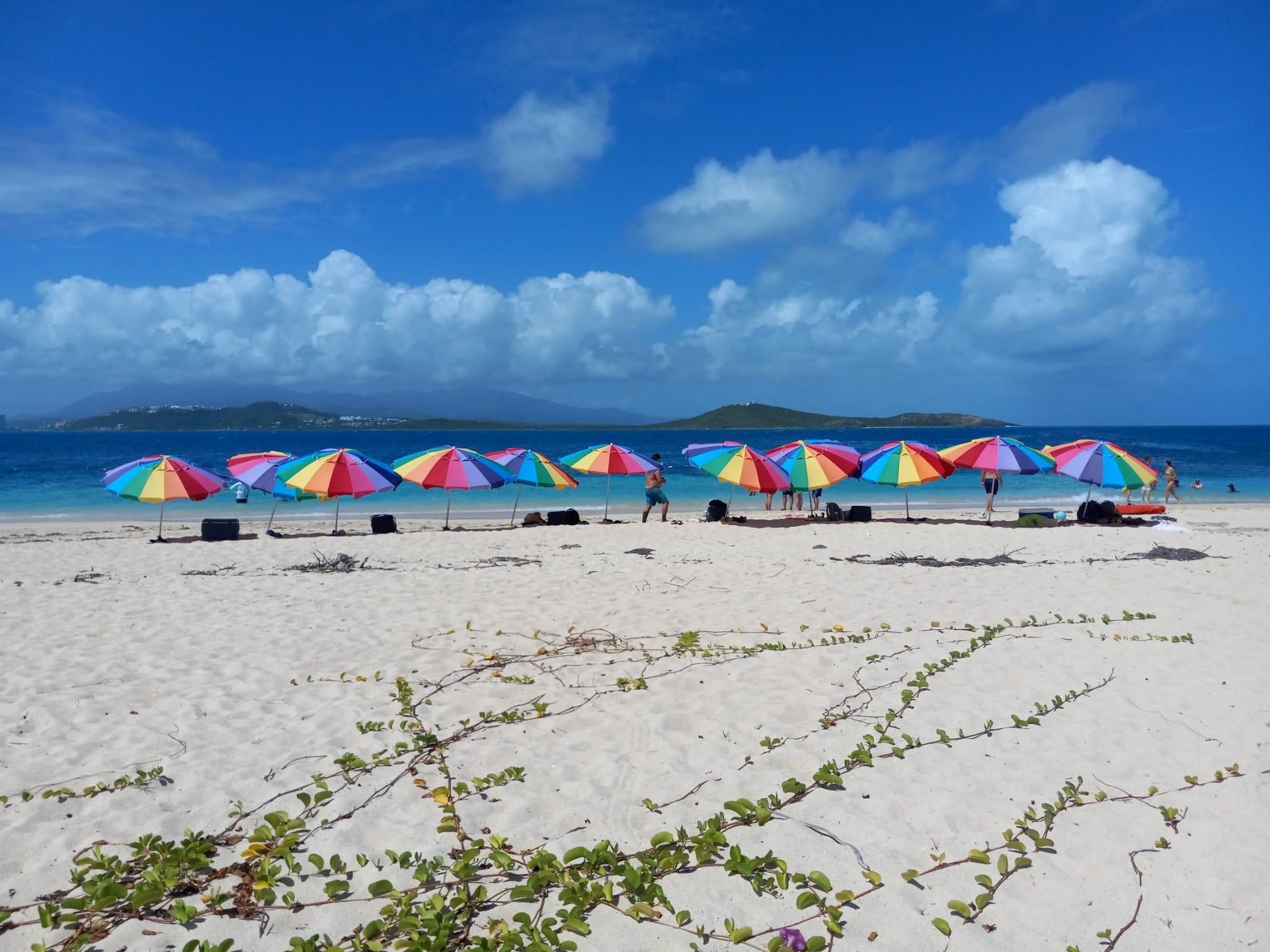
The Beach Day Package, Booked in One Step
Round-trip water taxi from Las Croabas plus a guide, umbrellas, snorkel gear and a cooler of drinks — rated 4.9/5 by 70 verified guests. Booking direct is a few dollars cheaper; booking here confirms instantly and cancels free up to 24 hours out, against the operators' 48. Both numbers are on this page.
Check Availability & Book